
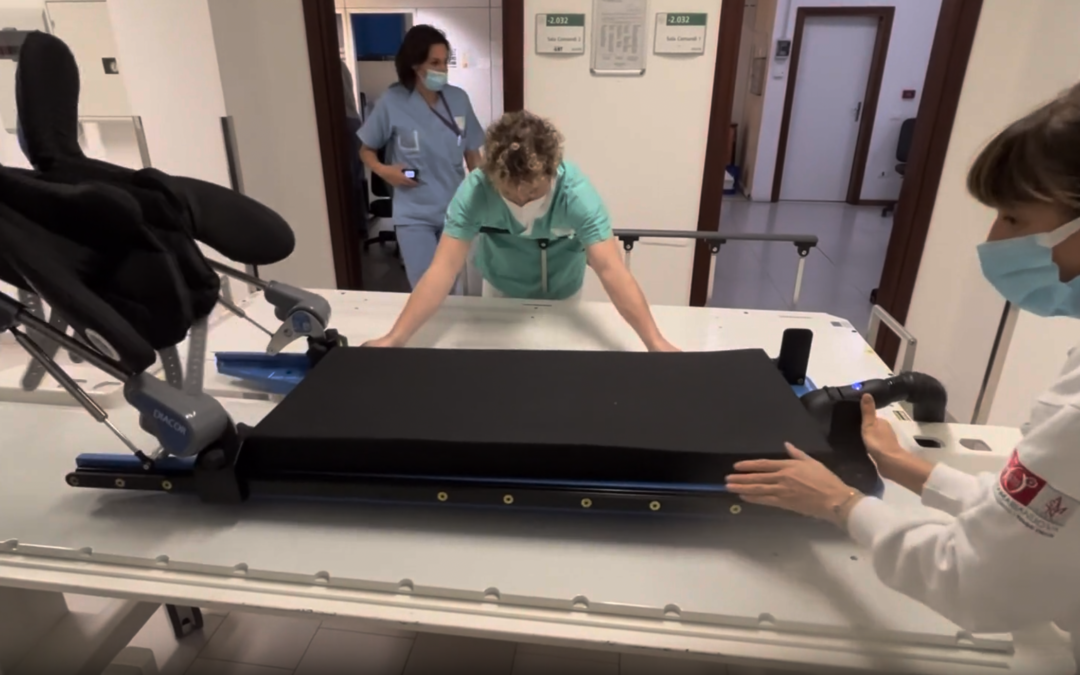
Diacor sat down with the multidisciplinary gynecologic oncology team at Reggio Emilia Hospital, Italy—including Dr. Alice Zamagni, Radiation Oncologist; Francesca Casini Radiation Therapy Technologist; and nurse Claudia Grassi—to learn about their experience using the Zephyr hoverboard. The team has been using the Zephyr system for more than three years and uses it several times per week in their routine clinical practice.
Supporting High-Volume, Complex Brachytherapy Care
Reggio Emilia Hospital treats a high volume of complex brachytherapy cases each year, delivering approximately 50–100 postoperative endometrial cancer treatment sessions and an additional 20–30 radical cervical cancer treatment sessions annually. This workload requires a strong focus on efficiency, safety, and reproducibility.
Brachytherapy workflows often require multiple patient transfers — from applicator placement to CT simulation, when indicated to MRI for further imaging, and subsequently back to the treatment room for radiation delivery. Historically, these transfers involved manually moving patients between beds using rigid transfer boards, a process that could be physically demanding for staff and uncomfortable for patients.
Reggio Emilia Hospital uses the Zephyr patient transfer system, chosen for its MRI compatibility and its ability to support both CT and MRI imaging with applicators already in place, helping preserve treatment accuracy and overall quality.
A Safer, More Streamlined Workflow
Since implementing the Zephyr hoverboard system, the team has seen a clear improvement in workflow organization and efficiency. The ability to move patients between CT, MRI, and treatment rooms without repositioning or lifting has been especially impactful.
According to the team, transfers are now faster, more controlled, and require fewer staff members to complete safely. The compressed-air technology enables smooth movement between surfaces, which is particularly important for maintaining applicator position during gynecologic brachytherapy.
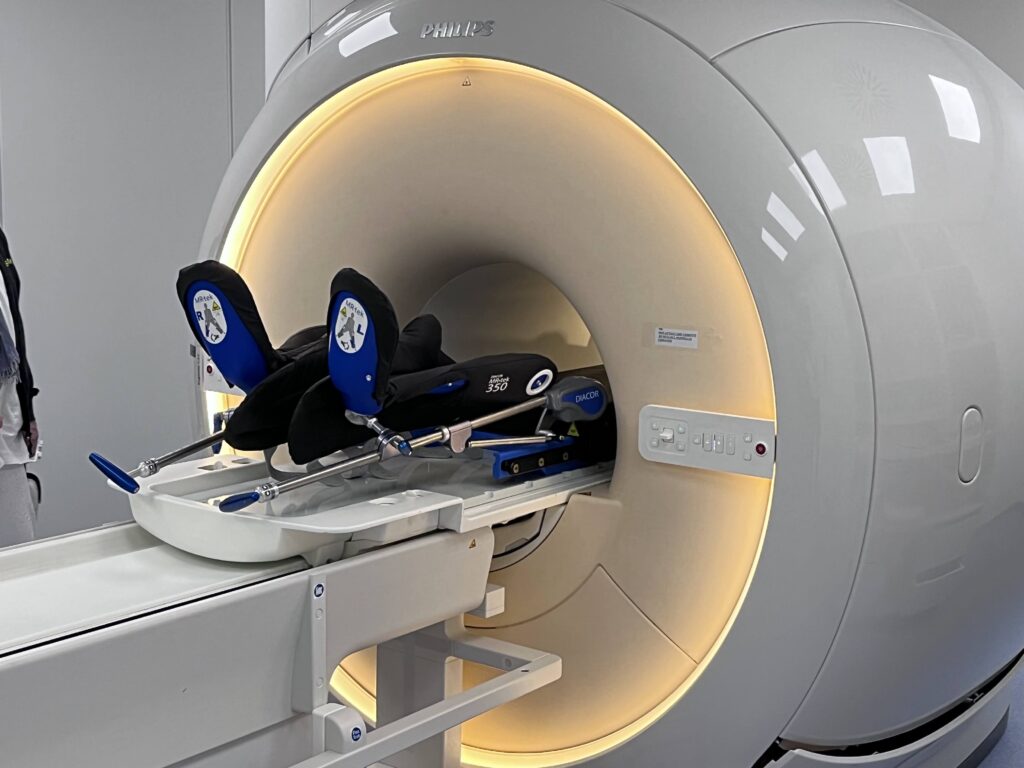
Clinical data supports this experience. Studies cited by the team show that applicator displacement decreased from 22% to 7% when using the hoverboard system, with average displacement reduced from approximately four millimeters with manual transfer to two millimeters with the Zephyr system. For clinicians, this improvement translates directly to greater confidence in treatment accuracy and reproducibility.
“The Zephyr system allows for a smoother and more controlled transfer.”
—Claudia Grassi, Radiation Therapy Nurse
A Positive Patient and Care Team Experience
The impact of the system varies by clinical role, but benefits are felt across the entire department. Nurses and support staff experience reduced physical strain and safer patient handling. Radiation therapists benefit from more stable positioning during imaging and treatment delivery. For the radiation oncologist, the most significant advantage is applicator stability during transfers, supporting both treatment quality and patient safety.
Patient feedback has also been overwhelmingly positive. Remaining on the same bed throughout a procedure—sometimes lasting several hours—reduces anxiety and discomfort, particularly compared to repeated manual transfers. Patients report feeling more secure, and clinicians note a reduced risk of injury during transport.
For this department managing complex, high-volume gynecologic brachytherapy cases, Zephyr has become a reliable solution that supports both clinical excellence and compassionate care.