
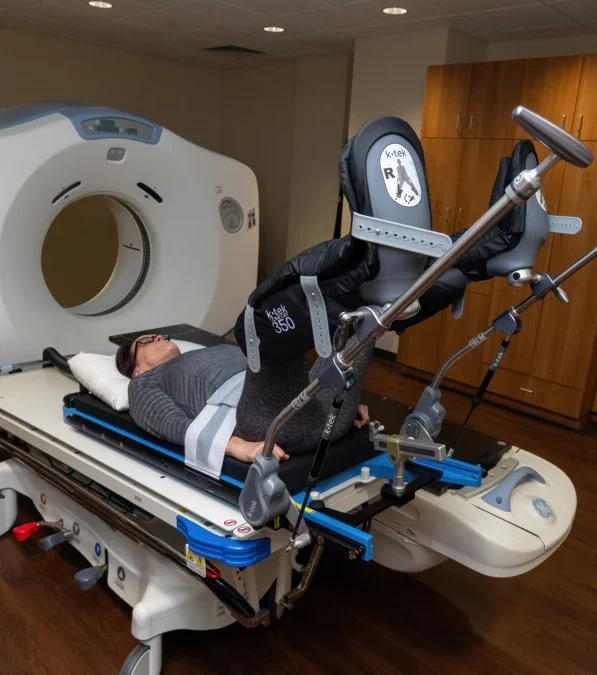
At John Stoddard Cancer Center at UnityPoint Health in Des Moines, Iowa, Chief Medical Physicist Jen Scharff, MS, DABR and her team perform a wide range of HDR brachytherapy procedures, including prostate and gynecologic treatments such as tandem-and-ring, cylinder, and hybrid interstitial cases. For these procedures where precision and stability are critical, the team has incorporated the Zephyr hoverboard patient transfer system. 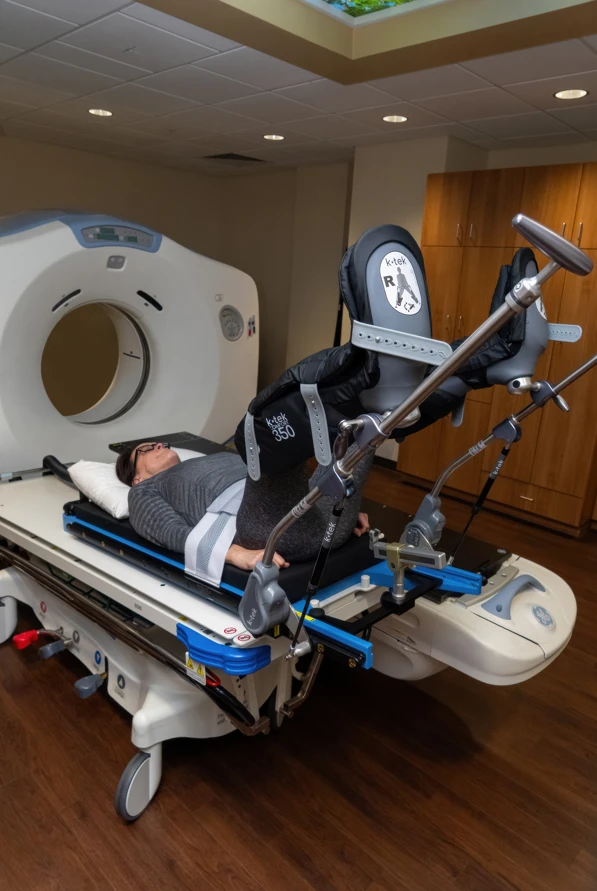
Protecting the Treatment Plan
Scharff, who has worked in medical physics for more than two decades, emphasizes that maintaining applicator stability during transfers is essential. “From a physics perspective, the biggest impact is that things don’t move,” she explains. “If we complete a plan and something shifts during transfer, all the work we just did is lost and we have to start over.”
The Zephyr hoverboard creates a cushion of air beneath the patient, allowing them to glide smoothly between surfaces such as the stretcher, CT table and operating room table, maintaining the precise positioning required for HDR planning and treatment. As a result, the system plays an important role in the center’s HDR workflow.
Improving Workflow for Busy HDR Teams
Beyond protecting the integrity of the treatment plan, the hoverboard has improved workflow efficiency while minimizing physical strain of the staff.
Traditionally, transferring patients—particularly larger prostate patients positioned in stirrups—could require four to six staff members to safely slide a patient across surfaces. With the hoverboard, transfers typically require only two people.
“As most departments are these days, we’re often short on staff,” Scharff says. “With the Zephyr, you only really need two people to move a patient. Sometimes it’s just me and the HDR therapist, and we can do the transfer without waiting for additional staff.”
Reducing the number of people required for each transfer not only saves time but also lowers the risk of injury for therapists and nurses who would otherwise need to perform physically demanding manual lifts.
A Smoother Experience for Patients 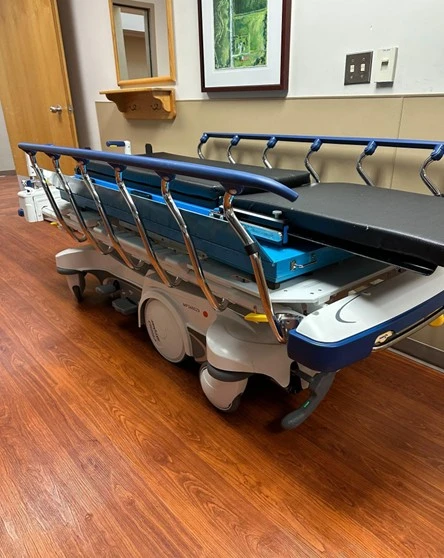
The benefits extend to patients as well. According to Scharff, many patients are fascinated by the technology, and the experience itself tends to be gentler than traditional slide-board transfers.
“Patients usually think it’s pretty cool,” she says. “With slide boards, you might see patients brace themselves or wince. With the Zephyr hoverboard, there’s none of that.”
After incorporating the system into routine practice, Scharff says the team has become strong advocates for the technology — something that hasn’t gone unnoticed by colleagues in other departments.
“When we bring it to the OR, the staff there always say they wish they had something like it for their own transfers,” she notes.
For the team at John Stoddard Cancer Center, air-assisted patient transfer with the Zephyr hoverboard has become an important part of delivering safe, efficient, and stable HDR brachytherapy workflows.