
In our brachytherapy workflow, a lot of the focus is on maintaining consistency and minimizing unnecessary variables, especially when patients are under anesthesia and applicators are in place. Small movements can have clinical consequences, so how we handle positioning and transfers matters more than people sometimes realize. It is important that we move patients safely and consistently through a complex treatment pathway.
In gynecologic cases, where patients are under general anesthesia, set up is on the Zephyr sled with stirrups to aid in applicator insertion. The hoverboard allows us to move the patient to the end of the stretcher, acting like an OR bed. Multiple lines are also in place from anesthesia. Being able to keep the patient on the same platform during those transitions helps reduce the likelihood of shifting anything unintentionally.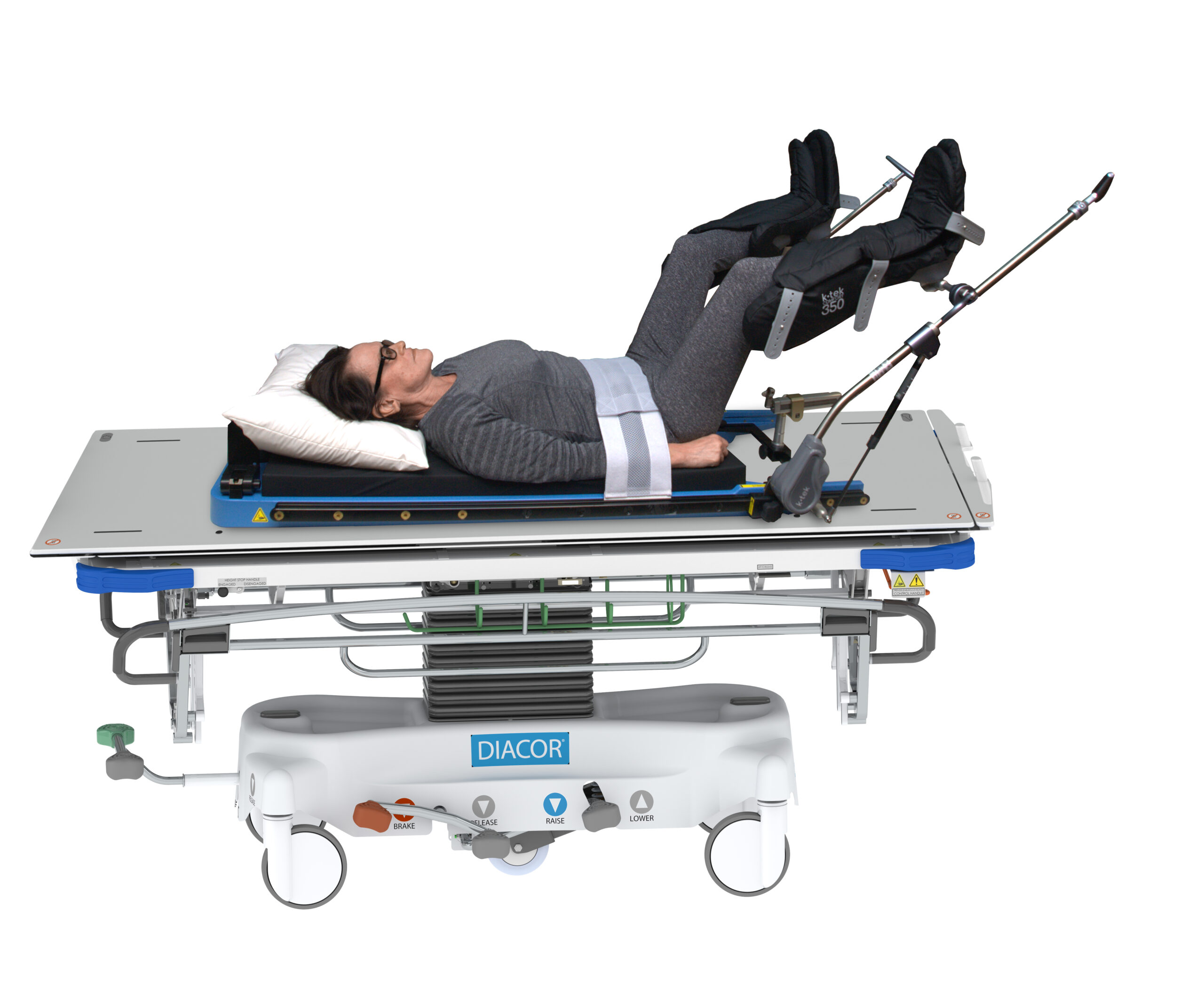
The Zephyr hoverboard on the stretcher helps us move patients in a controlled way between different stages of the procedure.
With Zephyr, we can transfer a patient directly onto the MR stretcher after the applicator insertion while they remain on the Zephyr sled, complete imaging, and then return them to the Zephyr stretcher to have treatment and ultimately applicator removal while anesthetized. This continuity makes it easier for the clinical team to maintain positioning and, when needed, refine applicator placement without introducing additional transfers.
From a therapist perspective, the impact is more practical than dramatic. Handling anesthetized patients – particularly when there are ventilator tubes, IV lines, and other equipment involved – can be physically demanding. Reducing the number of manual lifts and repositioning steps makes the process more manageable and, over time, less taxing. It also allows the team to focus more on coordinating the procedure rather than managing the mechanics of moving the patient.
The broader effect is on consistency. When patient movement is more controlled and reproducable, it supports a more predictable workflow for our therapists, physicians, and anesthesia. Using a patient transfer system doesn’t eliminate complexity, but it does remove some of the variability that can complicate these cases.
Even with a tool like Zephyr, we still have to teach therapists how to anticipate risks, such as line entanglement or pressure points during transfers, which help prevent issues before they occur. Verbal cues to remove hands from the hoverboard help prevent any incidents from occurring. Over time, this type of situational awareness becomes just as important as their technical skills.
That said, when teams adopt a standardized approach to positioning and transfers, it creates a more predictable environment. That predictability supports both efficiency and safety, particularly in cases where timing matters or multiple imaging steps are involved.